
Choosing the right size pet door starts with one very important step: measuring your dog correctly.
A dog door that is too small can be uncomfortable for your pet to use, while choosing a pet door that is much larger than necessary can mean a larger opening in your home and may affect energy efficiency. The goal is to choose a pet door that gives your dog enough room to move comfortably without installing a bigger door than they actually need.
Fortunately, measuring your dog for a pet door is easy. You only need a tape measure, your dog, and preferably a few treats to convince them to stand still!
Here’s exactly how to measure your dog for a pet door and what measurements matter when choosing the correct dog door size.
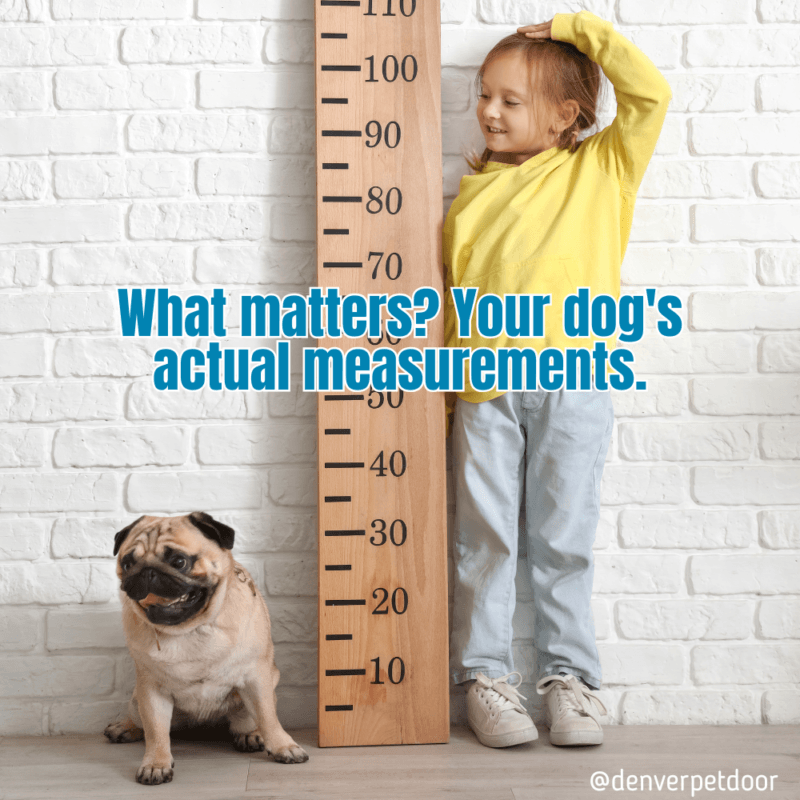
What Measurements Do You Need for a Dog Door?
When determining what size pet door your dog needs, there are two especially important measurements:
- Your dog’s height at the shoulders
- The width of the widest part of your dog’s chest
Don’t choose a pet door based on your dog’s weight or breed alone. Two dogs of the same weight can have completely different builds. A tall, narrow dog may need a different pet door size than a shorter, broad-chested dog of the exact same weight.
Actual measurements give you a much better idea of the pet door opening your dog needs.
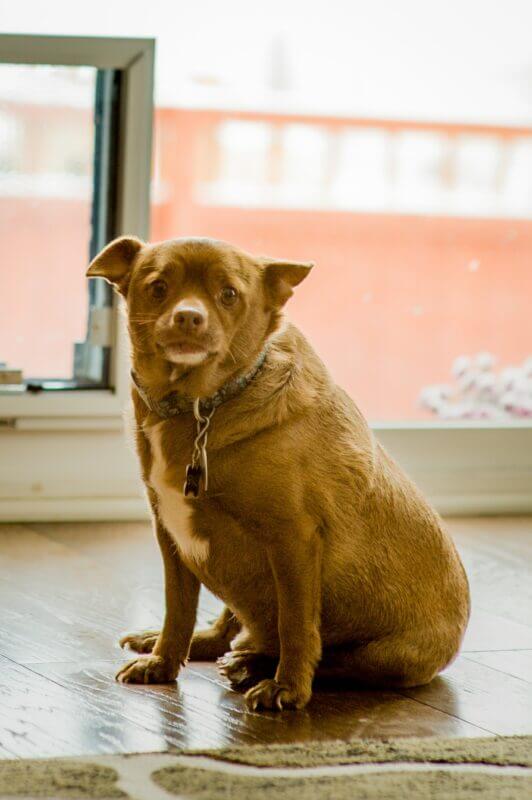
Step 1: Measure Your Dog’s Height at the Shoulders
Have your dog stand naturally on all four paws on a flat surface.
Using a tape measure, measure from the floor to the top of your dog’s shoulders, also called the withers.
Do NOT measure to the top of your dog’s head.
Dogs naturally lower their heads when walking through a pet door, so the top of the head or ears aren’t the measurement we’re looking for. Instead, the important measurement is the highest point of the dog’s back around the shoulders.
Write this number down as your dog’s shoulder height.
Can’t Get Your Dog to Stand Still?
You’re definitely not alone.
Try having your dog stand next to you. Place your hand against your leg at the same height as the top of your dog’s shoulders. Once your dog walks away, measure from the floor to that spot on your leg.
It doesn’t need to be down-to-the-millimeter perfect. We’re looking for an accurate measurement that will help determine the appropriate pet door size.
Step 2: Measure the Widest Part of Your Dog’s Chest
Next, stand in front of your dog and measure across the widest part of their chest or body.
For many dogs, the widest point will be around the chest and shoulders.
Measure straight across from one side to the other.
You want the pet door opening to provide enough clearance that your dog can walk through comfortably without squeezing their shoulders through the opening.
The Easy “Doorway Test”
If measuring your dog’s chest sounds easier than actually doing it, there’s another trick.
Open a regular door just wide enough for your dog to comfortably walk through. Then measure the width of that opening.
This can give you a good visual idea of how much space your dog actually needs to comfortably pass through an opening.
Step 3: Consider the Step-Over Height
Pet door sizing isn’t only about the width and height of the flap.
You should also consider the step-over, sometimes called the rise.
The step-over is the distance between the floor and the bottom of the pet door opening. In other words, it’s how high your dog has to lift their legs to step through the pet door.
The ideal step-over depends on your dog’s height, build, age, mobility, and where the pet door is being installed.
This is especially important for:
- Senior dogs
- Short-legged breeds
- Small dogs
- Dogs with limited mobility
- Very tall dogs
- Homes where the interior and exterior ground levels are different
A professionally installed pet door can often be positioned to create a more comfortable entry and exit for the dog.
How Much Extra Room Does a Dog Need?
Your dog’s measurements tell us the minimum amount of space they physically need, but you don’t want the pet door opening to be exactly the same size as your dog.
Your dog needs some clearance.
A general guideline is to allow approximately 1–2 inches of additional clearance around the dog’s measurements when comparing them with a manufacturer’s pet door opening dimensions.
However, pet door designs and flap dimensions vary by manufacturer, so always compare your dog’s actual measurements with the specifications for the particular pet door you’re considering.
If your dog’s measurements fall right between two pet door sizes, we can help determine which option will give them the most comfortable fit.
What If You Have More Than One Dog?
If multiple dogs will use the same pet door, start by measuring your largest or tallest dog.
You’ll want the opening to accommodate the largest pet comfortably.
But don’t forget about your smallest dog!
The step-over height still needs to be comfortable for the smallest dog using the door. This is one reason professional pet door sizing can be particularly helpful in multi-dog households.
For example, a home with a Great Dane and a Dachshund needs a pet door opening tall enough for the Great Dane but positioned low enough that the Dachshund can comfortably step through it.
Don’t Choose a Dog Door Based on Weight Alone
One of the most common mistakes when shopping for a pet door is assuming:
“My dog weighs 60 pounds, so I need a large dog door.”
Not necessarily!
Weight can be a helpful reference, but your dog’s physical proportions are far more important.
Consider two 60-pound dogs:
A tall, slender dog may require a taller flap but not an especially wide one. A stocky, broad-chested dog may require a wider opening even though they’re considerably shorter.
That’s why at Denver Pet Door, we focus on your actual dog, not simply a number on a generic dog door size chart.
What Size Dog Door Do I Need?
To determine the best pet door size, remember these three things:
HEIGHT: Measure from the floor to the top of your dog’s shoulders.
WIDTH: Measure across the widest part of your dog’s chest/body.
STEP-OVER: Consider how high your dog can comfortably step through the bottom of the opening.
Then compare those measurements with the actual pet door flap opening dimensions, not just labels like Small, Medium, Large, or Extra Large.
“Large” isn’t a universal measurement. Pet door dimensions can vary significantly between manufacturers.
Don’t Forget About Puppies
Have a puppy?
You’ll want to consider how large your dog is expected to be when fully grown.
Installing a perfectly puppy-sized pet door isn’t particularly helpful if your Labrador outgrows it six months later!
If you’re unsure about your puppy’s expected adult size, your veterinarian may be able to give you an estimate based on their breed, current size, age, and growth.
Your Dog’s Size Isn’t the Only Thing That Matters
Finding the correct pet door size is only one part of choosing the right pet door.
You also need to consider where the pet door will be installed.
Depending on your home, a pet door may be installed through:
- Exterior doors
- Interior doors
- Walls
- Siding
- Stucco
- Brick
- Glass
- Sliding glass doors
- French doors
- Windows
The best pet door size and installation location will depend on both your dog and your home.
For example, an in-glass pet door installation requires different planning than installing a dog door through a wall or exterior door.
That’s why having your dog professionally measured and your installation location evaluated can save you a lot of guesswork.
Professional Pet Door Installation in the Denver Metro Area
Still wondering, “What size dog door does my dog need?”
You don’t have to figure it out alone.
At Denver Pet Door, we’ve been helping Colorado dog owners find pet door solutions for years. We professionally install pet doors throughout the Denver Metro area and can help determine the appropriate pet door size, placement, and installation method for both your dog and your home.
We work with a wide variety of installation types, including pet doors through glass, walls, exterior doors, siding, stucco, brick, French doors, sliding glass doors, and other custom applications.
Whether you have a tiny Chihuahua, a broad-chested Bulldog, a tall Great Dane, or several dogs of completely different sizes, we’ll help you find a solution designed around your pets.
Not Sure What Size Pet Door Your Dog Needs?
Send Denver Pet Door your dog’s measurements — or let us help you measure them.
For the best recommendation, have these details ready:
- Your dog’s shoulder height
- Your dog’s chest width
- Your dog’s approximate weight
- Your dog’s breed
- Your dog’s age
- The number of pets using the door
- Where you’d like the pet door installed
We’ll help you determine the best pet door size and installation option for your home.
Contact Denver Pet Door today for a free estimate and professional pet door installation in the Denver Metro area.
Frequently Asked Questions About Dog Door Sizing
How do I measure my dog for a pet door?
Have your dog stand naturally on all four paws. Measure from the floor to the top of their shoulders for height. Then measure across the widest part of their chest or body for width. Compare these measurements with the actual flap opening dimensions of the pet door.
Do I measure a dog to the head or shoulders for a dog door?
Measure your dog to the top of the shoulders, not the top of the head. Dogs naturally lower their heads as they pass through a pet door.
How wide should a dog door be?
A dog door should be wider than the widest part of your dog’s chest or body so they can pass through comfortably without squeezing. Many sizing guides recommend allowing approximately 1–2 inches of additional clearance.
Should I size a pet door by my dog’s weight?
Weight can be used as a general guide, but your dog’s shoulder height and chest width are more useful measurementswhen determining whether they can comfortably fit through a particular pet door opening.
What if my dog is between two pet door sizes?
Don’t automatically choose based on the Small, Medium, or Large label. Compare your dog’s shoulder height and chest width with the actual flap opening dimensions. If you’re still unsure, Denver Pet Door can help recommend the best size.
How do I measure for a dog door if I have multiple dogs?
Measure the largest and tallest dog that will use the pet door, but also consider whether the step-over height will be comfortable for your smallest dog.
Can a pet door be too big for a dog?
Yes. Bigger isn’t always better. Ideally, you want a pet door that gives your dog comfortable clearance without creating an unnecessarily large opening in your home.
Where can a dog door be installed?
Depending on your home and the pet door, professional dog door installation may be possible through glass, exterior doors, walls, siding, stucco, brick, French doors, sliding glass doors, windows, and other custom locations.
Can Denver Pet Door help me choose the correct pet door size?
Absolutely. Denver Pet Door can help you determine the right pet door size based on your dog’s measurements, build, mobility, number of pets, and the location where you’d like your pet door installed.
Ready to book your free consultation? Contact us today to get started!
